On this page
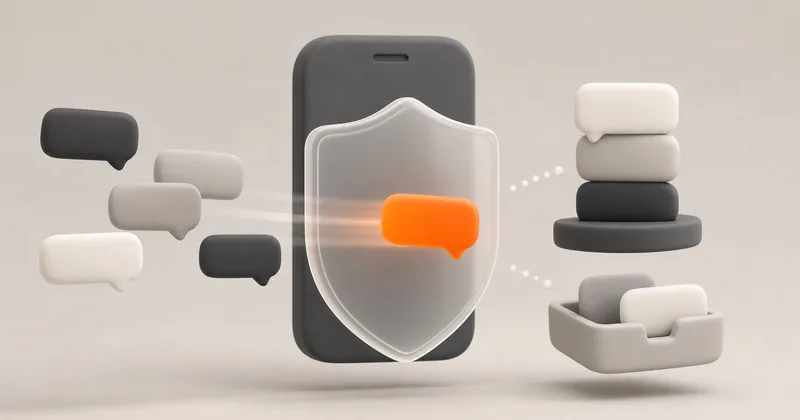
An AI assistant answering customer texts and calls now sits between your business and many of the people you serve. On October 14, 2026, Google announced on its Security blog an opt-in Enhanced protection mode for Google Messages that sends texts from unknown senders to cloud Gemini models to judge their context and intent, on top of the scam checks that already run on the phone. Write like a sender the customer expects, in a thread they started, with a clear name and no surprise links, and these assistants work in your favor.
What Google announced on October 14, 2026
The post, by Google Messages product manager Alberto Pastor Nieto and Android product manager Shaifali Bhandari, describes several changes. The ones that touch business messaging are these:
- Enhanced protection in Google Messages. A setting the user turns on. When a conversation involves an unknown sender, Scam Detection can use cloud Gemini models to weigh the message's context and the sender's intent. Google says this runs in Private AI Compute, where the data is encrypted. Rollout starts in the coming weeks.
- Link checks. On newer phones, including Pixel 10 and later and the Galaxy S26 series, Gemini Nano on the device uses live web signals to judge an unfamiliar link before it opens.
- Link checkpoints. Links from numbers that are not in the customer's contacts get a warning with extra context before the tap.
- Scam alerts in notifications. Suspicious messages can be flagged in the notification shade, before the chat is opened. Google says a dozen Android phone makers will add this later in the year.
5 million
Suspected scam calls and texts that Google says its AI Scam Detection flags every month. Source: Google Security blog, new Android scam protections, October 14, 2026.
Google does not publish how the models score a message. What it does say is that context, intent and links from unknown senders are what get weighed, and that is enough to change how you write.
The other assistants already between you and your customer
Android is not alone. Two features that shipped earlier in 2026 already change what happens to your first contact.
On the Galaxy S26 series, Samsung's call screening with an AI assistant answers the call in an AI voice and asks who is calling and why, according to Samsung's support page updated April 24, 2026. The phone owner reads the exchange as a live transcript, can take over the call, or can type a reply that the assistant reads aloud.
On iPhone, Apple's support page of April 8, 2026 explains Screen Unknown Senders in iOS 26. When it is on, texts from anyone who is not in the contacts and has not messaged with the person before go to a separate Unknown Senders list. Replying does not mark a sender as known; the customer has to tap Mark as Known. The filter stops applying once the person has replied to a sender three or more times, and texts can also be sorted into Transactions and Promotions.
How your texts look to a screening assistant
None of these filters publish a checklist for businesses, and you should not try to game them. But the signals they describe are clear enough to write against.
| What the feature weighs | Where it comes from | What to do in your texts |
|---|---|---|
| Whether the sender is unknown | Android and iPhone both treat numbers outside contacts differently | Reply in the thread the customer started, and invite them to save your number in the first message |
| Context and intent of the conversation | Google's Enhanced protection mode | Name your business and the reason for the text in the first line, and refer to what the customer asked |
| Unfamiliar links | On-device link checks and link checkpoints | Link only to your own domain, avoid shortened links, and send a link only when the customer expects one |
| Message type | iPhone sorts into Transactions and Promotions | Keep reminders and confirmations free of offers, so they are not sorted with promotions |
| Who is calling and why | Samsung's AI call screening asks the caller directly | Answer the assistant in one sentence: your name, your business and the inquiry you are returning |
Replying when the assistant answers the call
A lead fills in your form at lunch, your salesperson calls back at 2 pm, and an AI voice picks up. The worst response is to hang up. The person is reading a transcript and deciding in seconds whether to take the call.
- State who you are: your first name and your business name, in one sentence.
- Say why: the exact inquiry you are returning, such as "your request for a quote on Tuesday's form".
- Offer a choice: the customer can pick up now, or you will text a booking link.
- Send the text at once: the same name and reason, in the thread the customer started if there is one.
- Log it: note on the contact record that the call was screened, so nobody calls three more times.
The levelpartner.ai platform sends that kind of reply automatically when a call goes unanswered. Our post on the missed call text back message has wording that names the business and the reason in the first line, which is exactly what a screening assistant shows the customer.
Consent still comes first
Screening software is one layer. The rules are another, and they apply whether or not a phone filters your message. Under the FCC's rules for the Telephone Consumer Protection Act, marketing texts sent with automated tools need prior express written consent. On October 26, 2026 the FCC published a final rule, effective November 25, 2026, that lets a sender name the ways customers can opt out, as long as each message says so clearly, and that separates opt-outs from informational and marketing messages.
Carriers expect business texts from ordinary local numbers to be registered under 10DLC, and unregistered traffic is more likely to be filtered before any phone sees it. Our A2P 10DLC registration checklist covers that step. This is general information, not legal advice.
What this means for your team
For a company with 10 to 250 staff, the change is small in effort and large in effect. The first text and the first call back now have an audience of two: the customer and the software deciding whether the customer sees it.
Start this week by rewriting your three most used first messages, usually the form reply, the missed call reply and the appointment reminder, so each names your business and the reason in the first line, links only to your own domain and asks the customer to save your number. Then check that your texting is registered and that consent wording sits next to every phone field. Our page on business texting and WhatsApp shows how those replies and the consent record sit on one contact.
Sources
- Google Security blog: new Android scam protections, by Alberto Pastor Nieto and Shaifali Bhandari, October 14, 2026
- Apple Support: View conversations from unknown senders in Messages on your iPhone, April 8, 2026
- Samsung Support: How to use the Call screening feature with AI assistant on the Galaxy S26 series, updated April 24, 2026
- Federal Communications Commission: Enhancing the Ability of Consumers To Control the Robocalls, final rule, Federal Register, October 26, 2026 (effective November 25, 2026)
Each source was checked on November 3, 2026.